You turned on the shower after a long day and got hit with cold water halfway through. Or maybe your 12-year-old tank is showing rust at the base and you know the clock is ticking. Either way, you are now doing what most homeowners in the Mooresville area do at that exact moment: comparing tankless and tank water heaters and trying to figure out which one actually makes sense for your home and your budget.
The answer is not the same for every household. Tankless units offer real efficiency gains and a longer service life, but they are not always the right call. Tank water heaters still make strong practical sense in many situations. After seeing both systems fail and thrive across hundreds of homes in the Lake Norman region, we can tell you the decision comes down to four things: how your household uses hot water, your home's existing infrastructure, your long-term plans, and the water quality coming out of your pipes.
How Each System Actually Works
Understanding the mechanical difference between these two systems helps you evaluate every other factor more clearly.
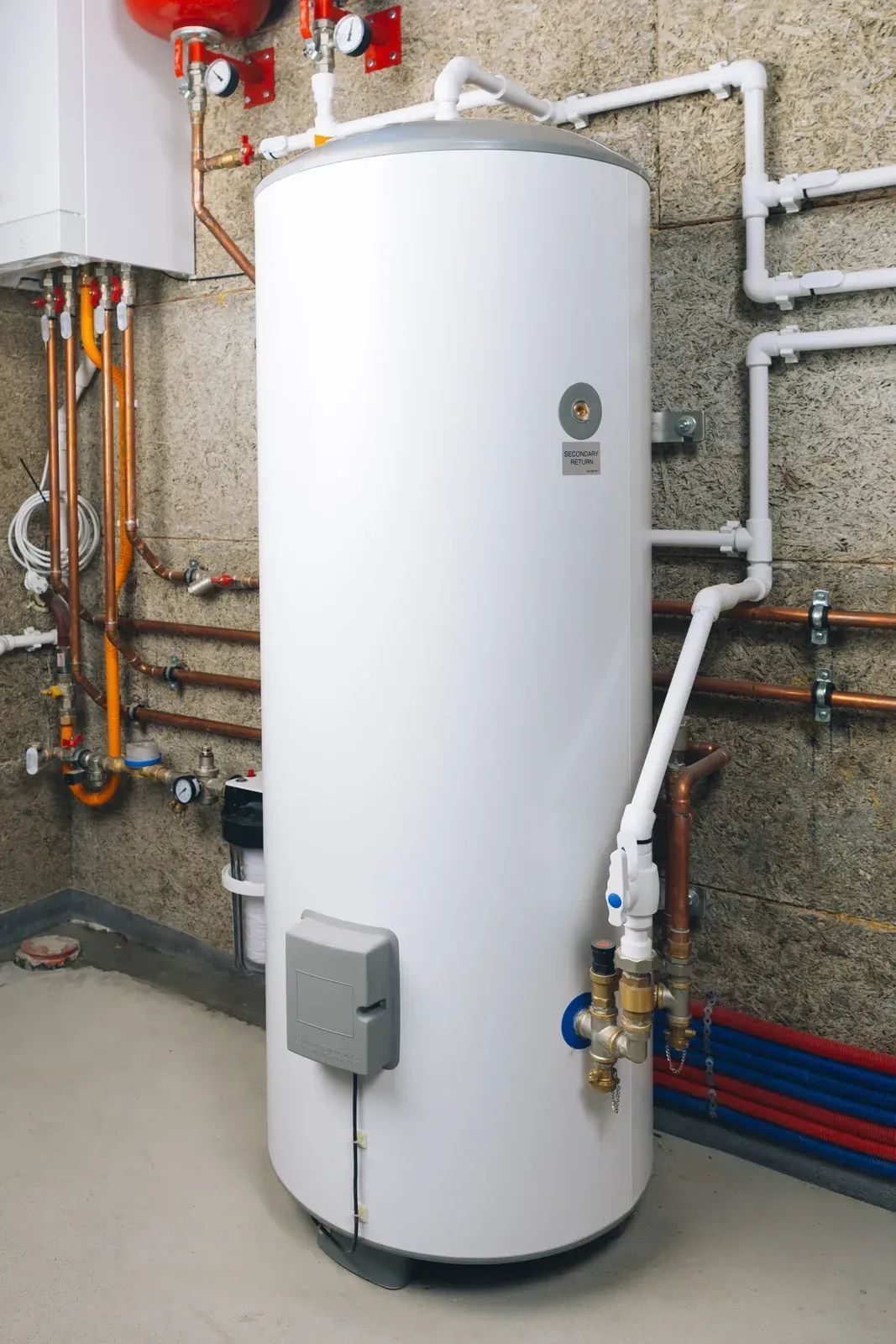
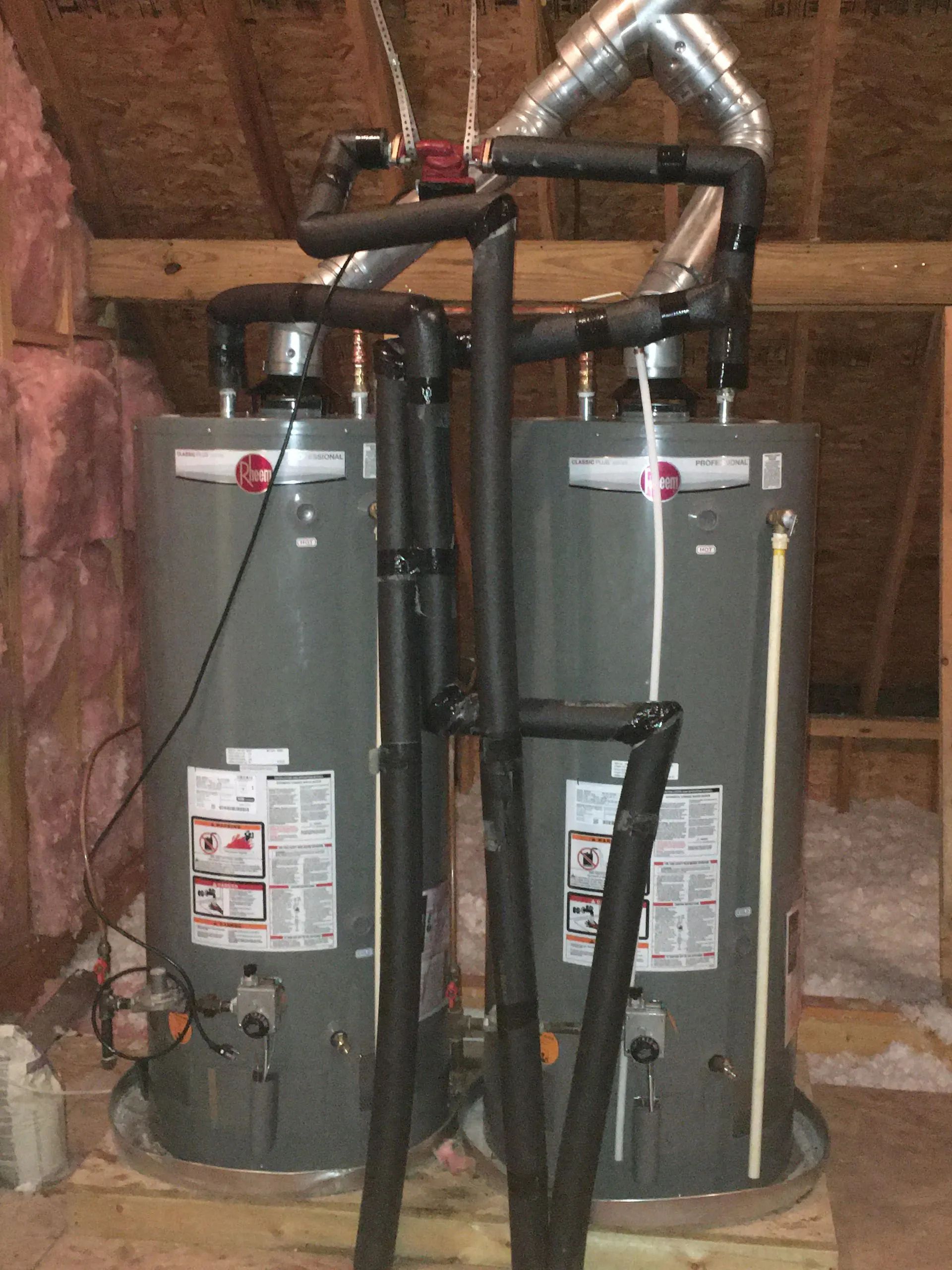
Tank water heaters store between 30 and 80 gallons of water in an insulated tank and keep that water heated continuously, typically between 120 and 140 degrees Fahrenheit. A gas burner or electric element cycles on and off to maintain that temperature around the clock, even when no one in the house needs hot water. When you open a hot tap, heated water flows from the top of the tank while cold water enters from the bottom to replace it.
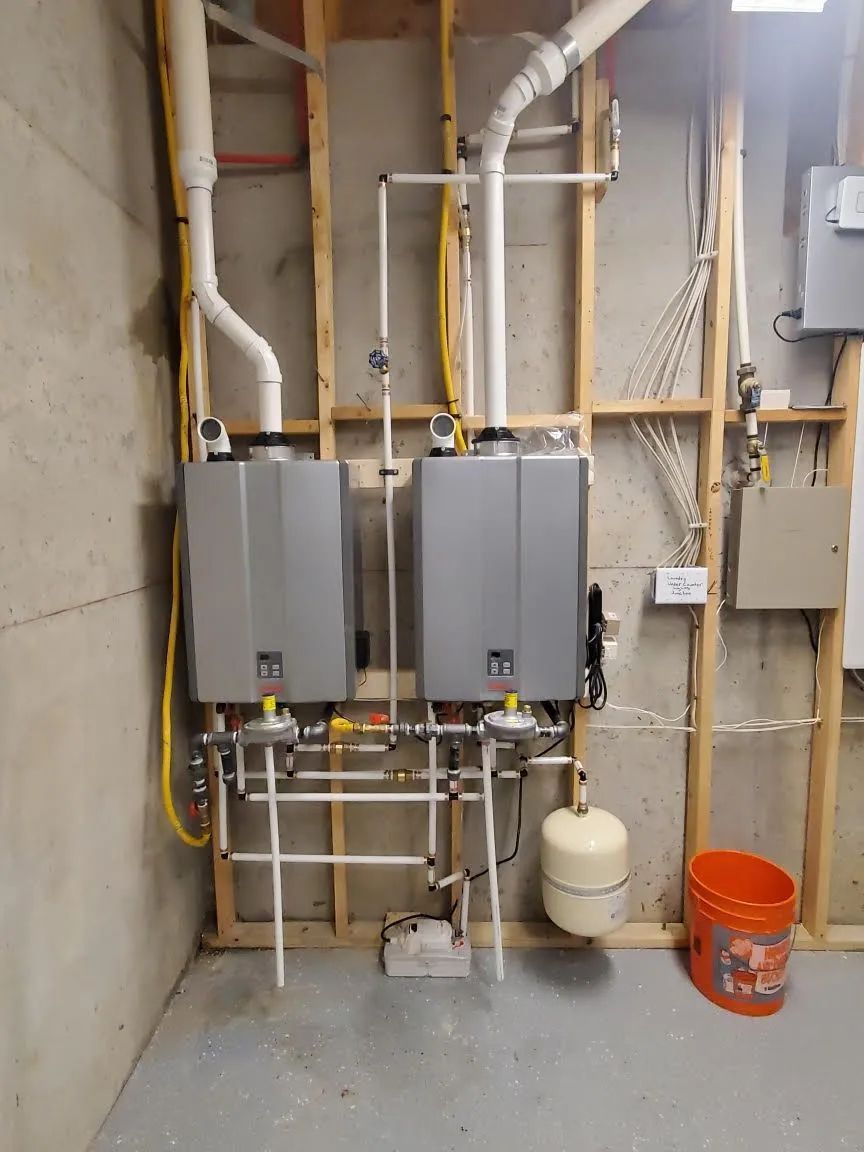
Tankless water heaters heat water on demand. When you open a hot tap, cold water flows through a heat exchanger and exits at the set temperature within a few seconds. There is no stored volume. Gas models use a high-output burner that fires only when flow is detected. Electric models use resistance coils. The unit shuts off the moment you close the tap. Nothing is being heated while the house sits idle.
The core trade-off is this: tank systems sacrifice energy to maintain standby temperature. Tankless systems sacrifice upfront simplicity to eliminate that standby loss.
Comparing the Two Side by Side
| Factor | Tank Water Heater | Tankless Water Heater |
|---|---|---|
| Upfront installation | Lower | Higher (often 2 to 3 times more) |
| Monthly operating expense | Higher due to standby heat loss | Lower, typically 24 to 34 percent more efficient |
| Hot water supply | Limited to tank capacity | Continuous, flow-rate dependent |
| Lifespan | 8 to 12 years average | 18 to 22 years with maintenance |
| Space required | 40 to 60 cubic feet or more | Wall-mounted, minimal footprint |
| Installation complexity | Standard in most homes | May require gas line upgrade or electrical panel work |
| Recovery time after depletion | 30 to 60 minutes | No recovery needed |
| Hard water sensitivity | Sediment buildup in tank | Scale in heat exchanger, requires descaling |
| Cold-climate performance | Consistent | Slight efficiency reduction in very cold inlet temps |
What Mooresville Homeowners Should Know About Local Water Quality
This factor does not get enough attention in generic comparisons, and it is the one that changes the math most significantly in the Lake Norman area.
Water in the Mooresville and greater Iredell County region runs moderately hard, with mineral content that accelerates scale buildup inside any heating system. In a tank water heater, that mineral content settles as sediment at the bottom of the tank. Over several years it creates a layer of insulation between the burner and the water, making the unit work harder and driving up energy use. A tank that pops and rumbles when heating is almost always telling you the sediment layer has reached a significant thickness.
In a tankless unit, those same minerals deposit inside the heat exchanger coils. Without annual descaling maintenance, a tankless unit in this region can lose efficiency within three to four years and fail prematurely at the heat exchanger, which is the most expensive component to replace.
Neither system is immune to hard water. Both require proactive maintenance to achieve their rated lifespan in this area. A tank unit needs the anode rod inspected every two to three years and sediment flushed annually. A tankless unit needs a descaling flush at least once per year, sometimes twice depending on the mineral load at your specific address.
WARNING: If your existing tank water heater is more than 10 years old and showing signs of rust at the base or the drain valve, do not attempt to flush it yourself. Disturbing sediment in an aging tank can dislodge corrosion from the tank lining and accelerate failure. Have a plumber inspect it before doing any maintenance on an older unit.
When a Tankless Unit Makes Strong Sense
Tankless water heaters perform best in specific situations. If your household runs multiple hot water demands simultaneously, including showers, dishwashers, and laundry at the same time, and you are willing to size the unit correctly for that simultaneous load, a tankless system can eliminate the cold-water competition between fixtures entirely.
Homes where the water heater sits in a conditioned space, like a utility closet inside the living area, benefit most from eliminating the storage tank because there is no heat loss from a large insulated vessel sitting in a temperature-controlled room. Tankless units are also the right choice when space is genuinely limited, since they mount to a wall and free up floor space in tight mechanical rooms common in older Lake Norman area homes.
TIP: Before pricing a tankless installation, have a plumber assess your current gas line size and your electrical panel capacity. Many homes in the Mooresville area were built with a half-inch gas line serving the water heater. Most high-output tankless units require a three-quarter-inch line. That upgrade adds to the total project scope and should be factored into your comparison from the start.
When a Tank Water Heater Still Makes More Sense
A standard tank water heater is not a compromise choice. For a household of two to three people with staggered hot water usage, a well-maintained 40 or 50-gallon unit delivers reliable performance at a lower installed cost, and the replacement cycle is straightforward when the unit reaches end of life.
Tank units also make practical sense when the home's existing gas and electrical infrastructure is not sized for a tankless upgrade without significant additional work. If the cost difference between the two systems, including necessary infrastructure upgrades, narrows to less than a few hundred dollars, the efficiency gains of going tankless may not recoup that investment before the unit reaches end of life, especially if you plan to sell the home within five to seven years.
Diagnostic Table: What Your Current System Is Telling You
| What You Are Seeing | Most Likely Cause | Severity | First Step |
|---|---|---|---|
| Rumbling or popping sounds during heating | Sediment layer at tank bottom | Medium | Flush tank or schedule professional flush |
| Rust-colored water at hot taps only | Tank interior corrosion | High | Schedule replacement evaluation |
| Water pooling at base of tank | Tank wall failure or pressure relief valve leak | High | Turn off water supply and call a plumber |
| Tankless unit showing error code during high demand | Undersized unit for household flow rate | Medium | Check unit's GPM rating against simultaneous demand |
| Inconsistent hot water temperature from tankless | Scale buildup on heat exchanger | Medium | Schedule descaling service |
| Hot water runs out faster than it used to (tank) | Failed lower heating element or heavy sediment | Medium | Element test or flush |
| Tankless unit takes 15 or more seconds to deliver hot water | Cold water sandwich or long pipe run | Low | Consider a recirculation pump |
| Water temperature fluctuates in shower | Pressure-balancing valve issue or undersized unit | Medium | Plumbing inspection |
Certified Expertise From Lake Norman Plumbing Co. Professionals
The right water heater is the one sized and installed for your actual household demand, maintained on a schedule that matches your local water quality, and selected with honest accounting of your infrastructure, your timeline in the home, and your long-term running expenses. In the Lake Norman region, hard water makes maintenance the most important variable in either direction.
At Lake Norman Plumbing Co., we have been installing, replacing, and servicing both tank and tankless water heaters across Mooresville, North Carolina for over 45
years. Whether you are replacing a failing tank on short notice or planning a whole-home plumbing upgrade, we assess your actual infrastructure before recommending a system, never the other way around. Reach out to schedule an on-site evaluation and get a clear picture of which system fits your home.
Frequently Asked Questions
How long does a tankless water heater last compared to a tank unit?
A well-maintained tankless water heater typically lasts 18 to 22 years. Tank water heaters in the Mooresville area average 8 to 12 years. Hard water and inconsistent maintenance push that toward the lower end, making lifespan one of the strongest arguments for choosing tankless.
Will a tankless water heater run out of hot water during high demand?
A correctly sized tankless unit will not run out of hot water. However, if demand exceeds its rated gallons per minute, temperature drops occur. Sizing to actual peak household demand, not just occupant count, is the variable most commonly miscalculated during installation in this area.
Is a tankless water heater worth it for a home with hard water?
Yes, but only with consistent maintenance. In Mooresville, where water mineral content runs moderate to high, a tankless unit without annual descaling loses efficiency within three to four years. A whole-home water softener significantly extends heat exchanger life and reduces how often descaling is needed.
What is the safety risk with an aging tank water heater?
A tank over 10 years old showing base corrosion risks sudden failure, releasing up to 80 gallons in minutes. A failing pressure relief valve adds further risk. If your unit shows rust, pooling water, or pressure irregularities, stop using it and schedule an inspection promptly.
Can I switch from a tank to a tankless unit without major home modifications?
Often some infrastructure work is needed. Gas tankless units frequently require a gas line upgrade from half-inch to three-quarter-inch pipe. Electric models may need a panel upgrade. Mooresville homes built before 1995 commonly require at least one of these changes before installation can proceed.