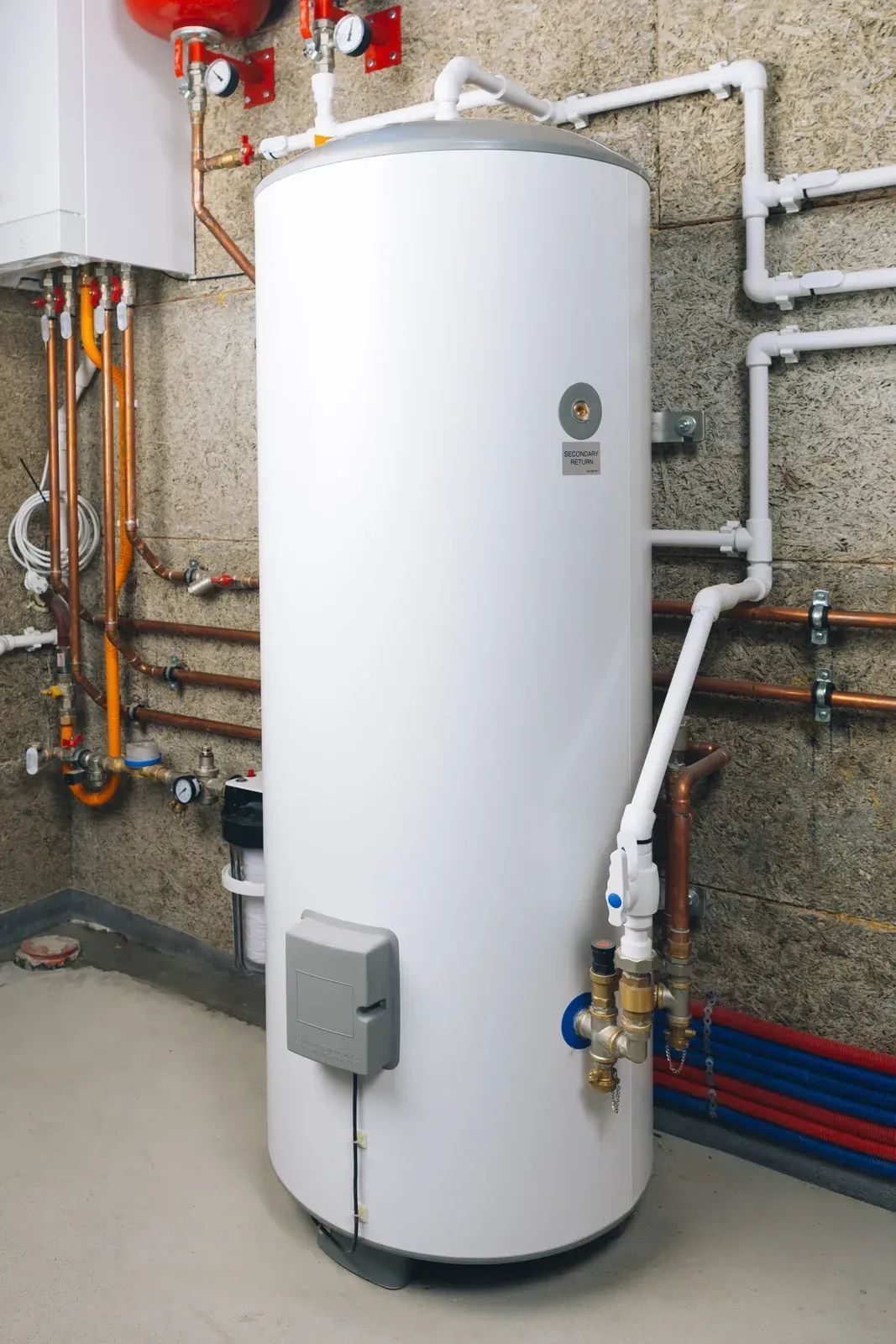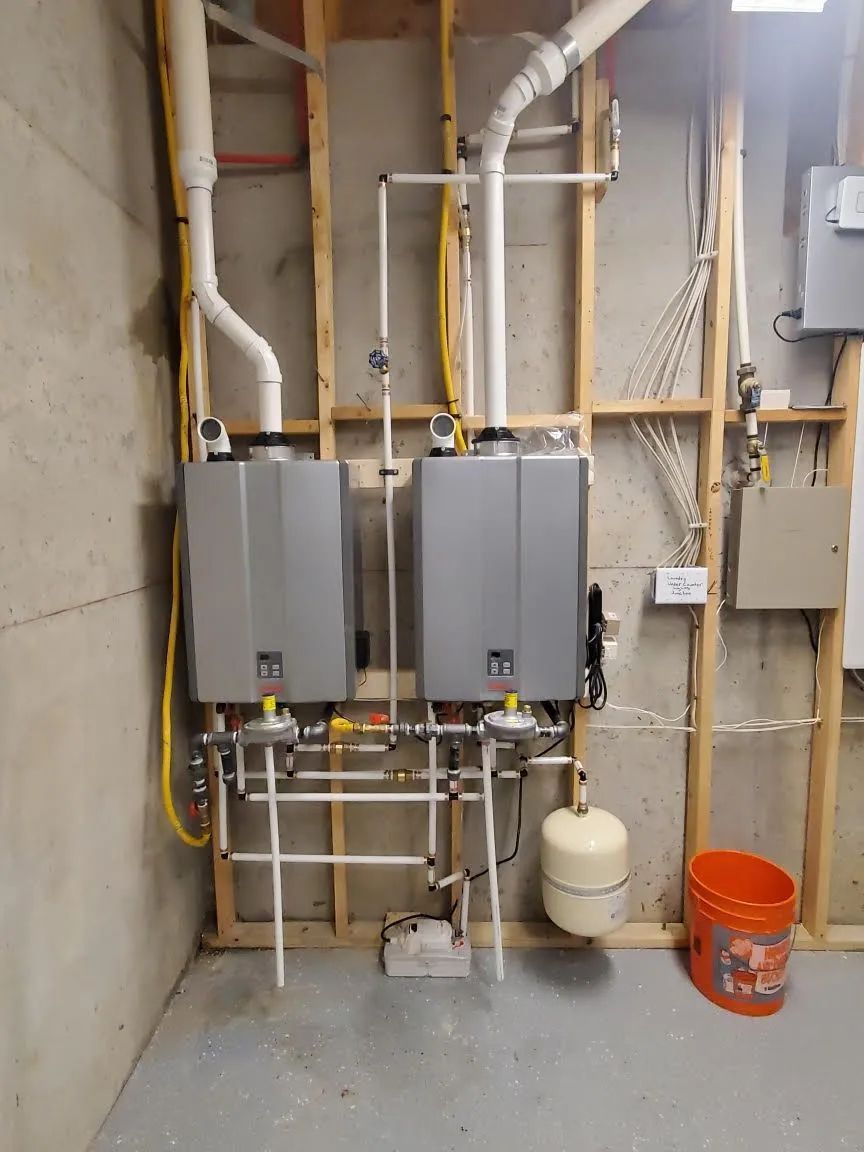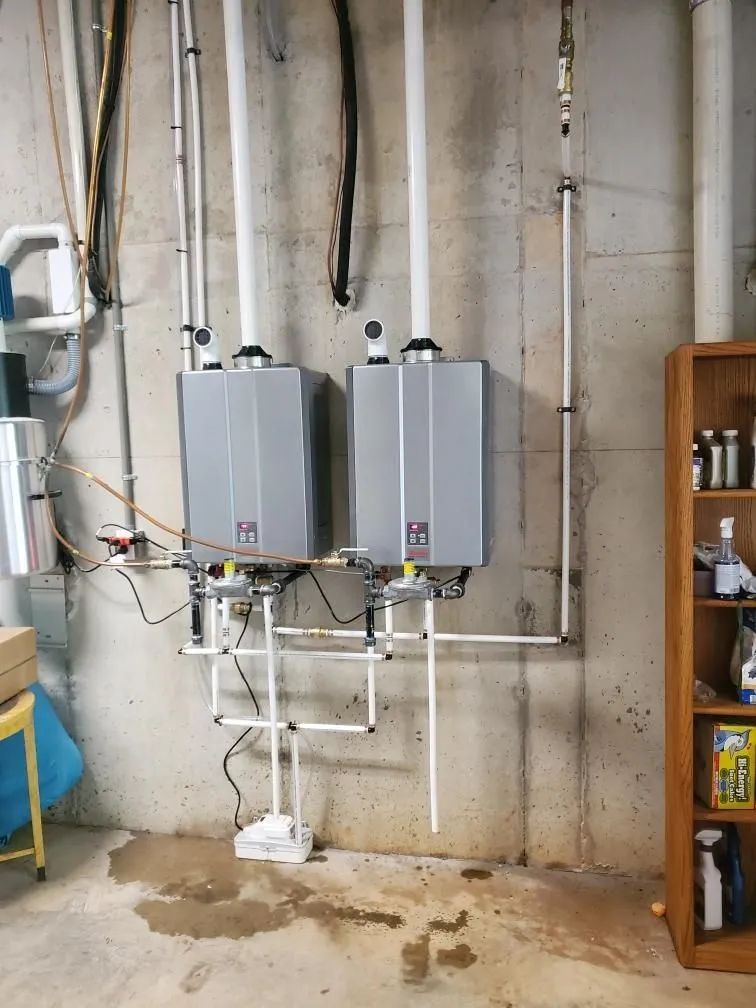
QUICK ANSWER: Rusty or discolored hot water almost always traces back to one of three things: a worn-out anode rod that has stopped protecting the tank from corrosion, mineral sediment stirred up inside the tank, or corroding galvanized pipe between the heater and the tap. Run the cold water at the same fixture first. If only the hot side is discolored, the problem is at the heater. If both run rust-colored, the source is further upstream. A worn anode rod and sediment are both fixable. A corroded tank liner is not, and it means replacement.
You turn on the tap for a bath and the water runs the color of weak tea. Or it's your hot water only, orange-brown for the first few seconds before it clears, or maybe it never really clears at all. Either way, the instinct is to assume the worst about the pipes in the walls. Most of the time that's not it. Something specific has changed inside the water heater tank, and it's usually one of a short list of things.
We work on tank and tankless systems across the Lake Norman area, and discolored hot water is one of the calls we field most. It's rarely as bad as it looks, and it's almost never a guessing game once you know where to look first.
Start With One Test Before You Call Anyone
Before troubleshooting the water heater itself, isolate where the color is coming from. Run the cold water at the same faucet where you noticed the problem.
Only the hot side is discolored
The water heater or the hot-water line closest to it is the source. This points to something happening inside the tank or the copper or galvanized piping feeding directly off it.
Both hot and cold are discolored
The source is upstream of the water heater entirely — the service line coming into the house, a well pump and pressure tank, or in rare cases a municipal main disruption nearby. A water heater repair won't fix that, and it's worth checking with your water provider or a well specialist first.
Check a second fixture too, ideally one farther from the water heater. If the color only shows up at one tap, you may be looking at a localized fixture or supply-line issue rather than the tank itself.
What's Happening Inside a Tank That's Turned the Water Rusty
Storage water heater tanks are steel with a glass lining, and steel corrodes when it's in constant contact with water. Manufacturers build in a defense against that: the anode rod.
The anode rod's job
A rod made of magnesium or aluminum runs down through the top of the tank. It's a sacrificial part by design — it corrodes first, so the steel tank doesn't have to. As long as the rod has active material left, it keeps drawing the corrosive reaction to itself instead of the tank wall.
What happens when it's used up
Once the rod is fully depleted, the tank has nothing left protecting it, and the steel itself starts to oxidize. That's what produces the reddish-brown or rust-tinted water. Depletion tends to happen faster in tanks that run hotter or in tanks that see softened water, since softening slightly increases the rate the rod wears down.
Why it can bring a smell with it
If a spent rod sits for a while before it's caught, bacteria can occasionally colonize the exposed metal, which sometimes adds a faint sulfur or metallic odor to the discoloration. That's a sign the rod has been gone longer than a few weeks, not a separate problem.
The fix here is a two-part job: replace the rod before the tank corrodes further, then flush the sediment the corrosion has already produced. Catching it at this stage is what keeps the tank itself out of the conversation.
When It's Sediment, Not Corrosion
Every water heater tank collects some mineral sediment over time — it settles out of the water and builds up on the bottom, whether or not the anode rod is doing its job. On its own, that layer doesn't discolor water; it just sits there.
The color shows up when that layer gets disturbed. A change in water pressure, a high-draw event like several showers back to back, or simply not using hot water for a few days can stir sediment back into suspension, and it comes out through the tap looking rust-colored or gritty. This version of discoloration tends to clear on its own after running the tap for a minute or two, and it's more common in homes on well water, where incoming mineral content tends to run higher than what's typically found in a treated municipal supply.
Flushing the tank — draining it fully and refilling to clear the loose sediment — resolves this on its own, no anode rod replacement required. It's also part of why an annual flush matters even when the water looks fine: it keeps sediment from accumulating to the point where it's stirring up on its own.
If It's Coming From Both Taps, Look at the Pipes
Homes built before the 1960s often used galvanized steel piping, which has a zinc coating meant to slow corrosion. That coating wears thin with age. And once it's gone, the iron underneath starts to rust from the inside out. Because hot water speeds up corrosion chemistry compared to cold, galvanized pipe problems frequently show up hot-water-first even though the pipe itself is corroding on both sides of the system.
Homes on private wells — common through Denver, Statesville, Troutman, Mount Ulla, and Sherrills Ford — can also see rust-colored water tied to the well itself: a corroding well casing, an aging pressure tank, or naturally occurring iron in the groundwater. Since that water reaches both the hot and cold sides equally, it usually shows up as color on both taps rather than hot water only, which is the clearest way to tell it apart from a tank problem.
If the discoloration traces back to piping or a well rather than the
water heater, whole-house filtration or a water treatment system built for iron removal is generally a more direct fix than anything done at the tank.
TIP: Keep a jug of the discolored water from the first minute you notice it. If a plumber needs to see the actual color and sediment content to diagnose it, a sample beats a description over the phone.
Signs the Tank Itself Has Failed
A worn anode rod is fixable. Sediment is fixable. A corroded tank liner is not, and it's worth knowing the difference before spending money on a repair that won't hold.
Discoloration that keeps coming back
If flushing the tank and swapping the anode rod only buys you a few clear days before the color returns, the corrosion has likely reached the tank wall itself rather than stopping at the rod.
Small leaks near seams or the drain valve
Rust that's progressed to pinhole leaks in the tank means the steel has been compromised, not just the rod.
A metallic taste that doesn't go away
Taste that persists after flushing points to ongoing corrosion inside the tank rather than a one-time sediment disturbance.
Rust visible on the outside of the tank
Exterior rust, especially near the bottom seam, usually mirrors what's already happening on the inside.
Once a tank has reached this point, replacement is the realistic path forward rather than another round of flushing.
WARNING: Never attempt to drain or flush a water heater without shutting off the power (electric) or gas supply first, and let the tank cool before opening the drain valve. Water inside can be well above 120°F and will scald on contact.
WARNING: Never attempt to drain or flush a water heater without shutting off the power (electric) or gas supply first, and let the tank cool before opening the drain valve. Water inside can be well above 120°F and will scald on contact.
What Routine Maintenance Actually Prevents
Anode rod depletion and sediment buildup are both things a yearly maintenance visit is built to catch before they show up as rust in your water. During a standard flush and inspection, a plumber pulls the rod to check how much active material is left, clears out accumulated sediment, and tests the pressure relief valve and thermostat while the tank is drained. Catching a spent rod at that stage means a simple swap instead of dealing with tank corrosion that's already underway.
For tankless systems, the equivalent service is descaling the heat exchanger, since tankless units don't have a tank or anode rod but still accumulate mineral scale that affects performance over time.
Is it safe to mount a TV over a fireplace?
Yes, with the right precautions. Heat off the firebox, wall structure, and viewing angle all need checking first. A gas or electric unit with managed heat can run for years. Wood-burning fireplaces with no heat plan cause trouble.
How far above the fireplace should the TV be mounted?
A common range is 8 to 12 inches between mantel top and screen bottom, though it shifts with your fireplace and wall height. The hotter the unit, the more clearance you want, keeping the screen above rising heat.
Can the heat from my fireplace really damage a TV?
It can, usually slowly. Most sets are rated up to 100-104 degrees, and unmanaged fireplace walls can climb past that. Over time this shows as dead pixels, a warped bezel, or shutdowns. Managing heat prevents it.
Do I need a special mount for a TV over a fireplace?
Most of the time, yes. A fixed mount aims the screen over your head. A tilting mount angles down toward viewers; full-motion arms pull out and down. The right choice depends on screen size and wall height.
Can I hide the wires if my fireplace is brick or stone?
It's harder than drywall but doable. Masonry rarely has an open cavity, so the path must be planned before mounting. Options range from in-wall routing to low-profile surface channels. Mapping the route first avoids disruptive retrofits.
Should the TV be bigger or smaller than the fireplace?
As a rule, match the firebox width or go slightly smaller, keeping the wall balanced. Oversized panels over narrow hearths are common now, but proportion makes the wall read as one clean focal point, not competing elements.
Frequently Asked Questions
Is rusty hot water safe to shower in or drink?
Rust and sediment are treated as an aesthetic issue rather than a health hazard — the concern is staining, taste, and odor, not toxicity. Persistent discoloration is still worth diagnosing, since it usually points to a tank issue.
Will flushing the water heater fix rusty water on its own?
It depends on the cause. Flushing resolves loose sediment on its own, but a depleted anode rod will keep causing discoloration until replaced. If the tank liner itself has corroded, flushing won't fix that either.
How long does an anode rod actually last?
It varies with water conditions and tank temperature, but most rods last a few years rather than a decade. Manufacturers generally recommend checking the rod periodically rather than waiting for discolored water to appear.
Why is my hot water rusty but my cold water is clear?
That pattern almost always points to the water heater itself or piping directly connected to it, since anything upstream would affect cold water too. It's the most useful clue before a technician even arrives.
Can a water softener cause rusty-looking water?
Softened water can slightly accelerate anode rod wear, indirectly shortening the time before rod-related discoloration shows up. The softener itself isn't producing rust — it's speeding up how fast the tank's protection gets used.
Does this mean I need a new water heater?
Not necessarily. Most discoloration resolves with an anode rod replacement and a tank flush. Replacement only becomes necessary once the tank liner has corroded — recurring discoloration that flushing doesn't fix, plus leaks or rust.
Getting a Clear Answer From a Cloudy Tap
Rusty hot water always has a specific origin, and tracing it back rarely takes more than a simple test at the faucet. Whether the cause turns out to be a spent anode rod, disturbed sediment, or aging pipe upstream, each one leaves its own clues once you know what to look for. Skipping straight to worst-case assumptions about the plumbing usually means overlooking the far more common, far more fixable explanation sitting inside the tank itself.
Lake Norman Plumbing Co.
has spent more than 45
years helping homes throughout Mooresville, North Carolina sort out exactly which of these causes is behind the water coming out of the tap. A rod swap and a flush solve most cases outright, while a tank that's truly reached the end of its life gets identified rather than patched over. Either way, a clear diagnosis means you're never left guessing at what's happening behind the wall.