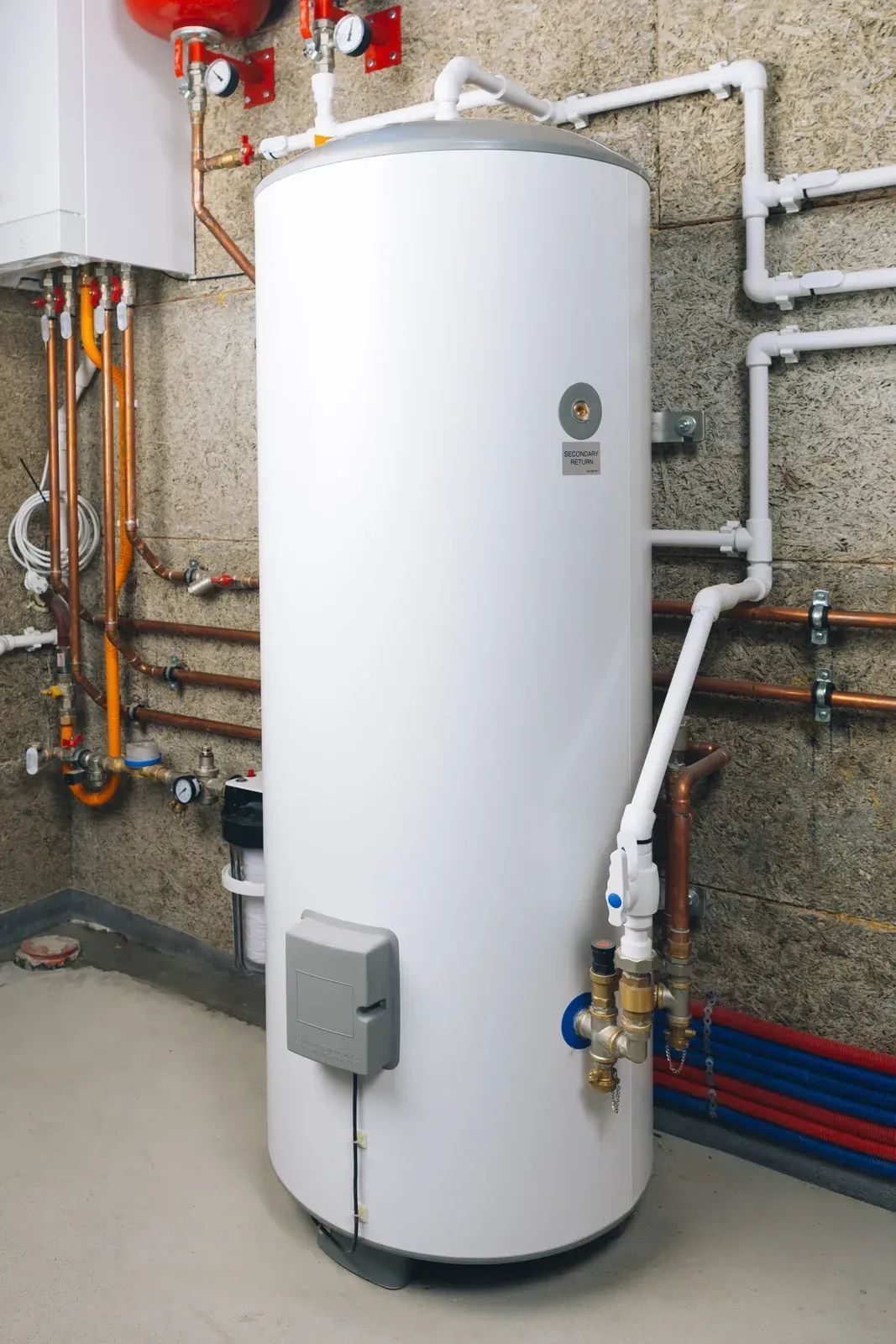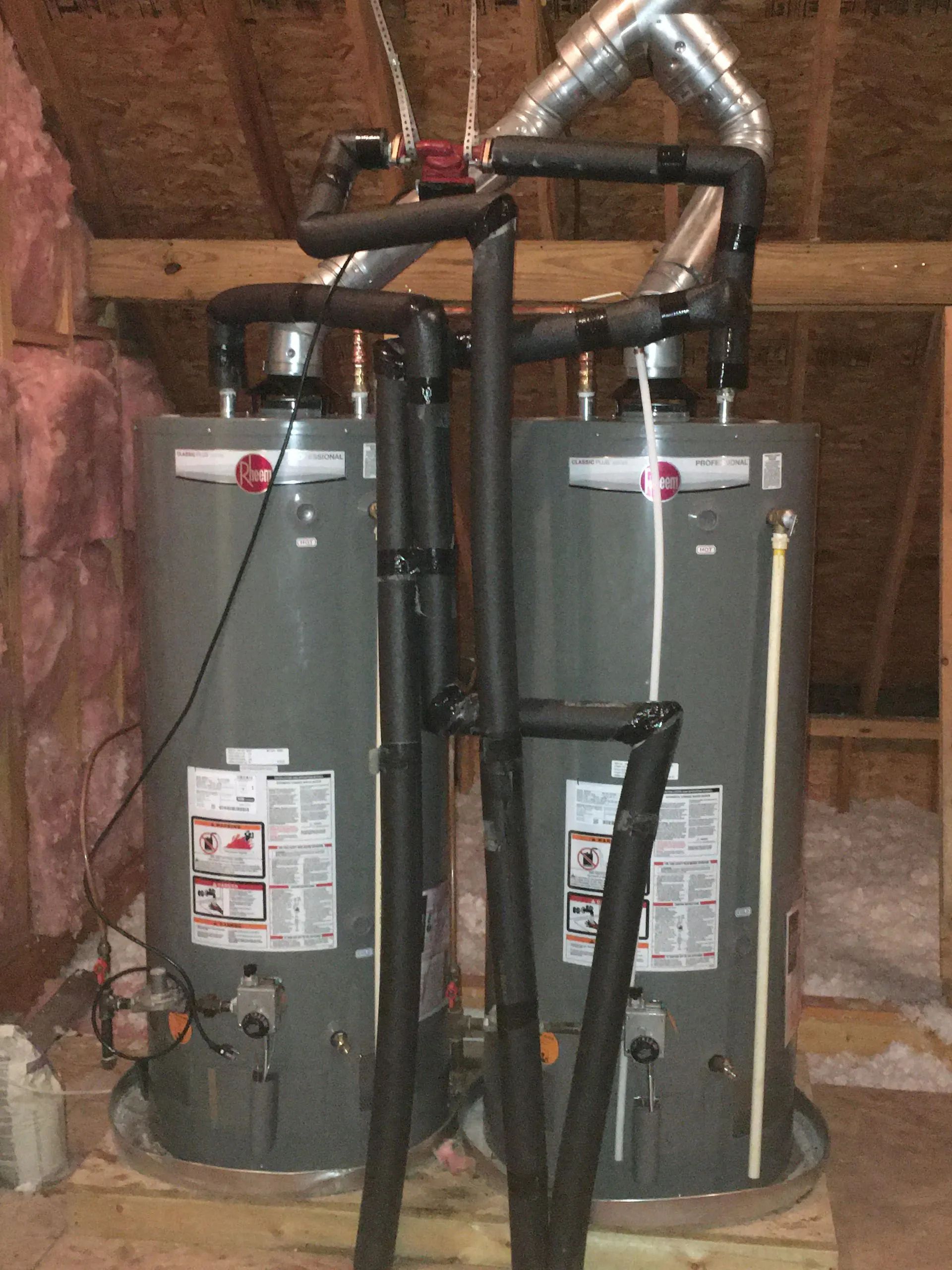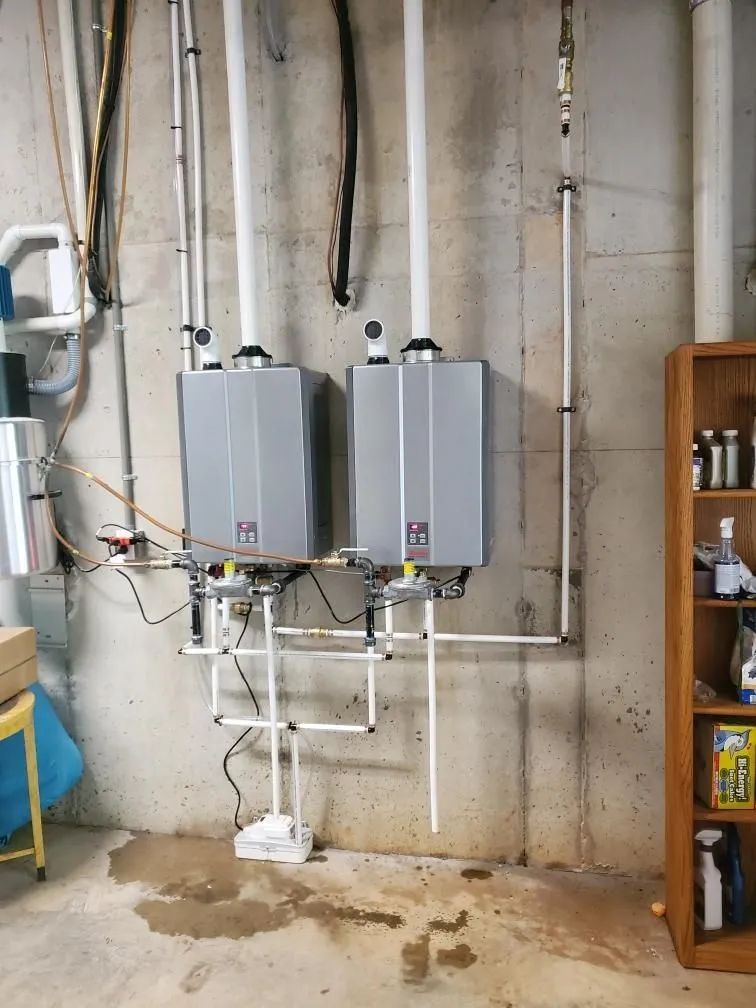
QUICK ANSWER: A tank water heater generally lasts 8 to 12 years, while a tankless unit can run 15 to 20 years or more with regular maintenance. Once a tank heater passes that range, repairs start solving one problem while the next one is already forming — a corroding tank, a failing heating element, sediment that keeps coming back. The clearest signal isn't any single symptom, it's a unit near or past its expected life span showing more than one of those symptoms at once.
Your water heater doesn't usually fail all at once. It wears down in stages — a little less hot water each year, a repair call that used to be rare turning into a yearly event, a tank that's quietly corroding on the inside long before anyone notices from outside. Knowing which stage yours is in is what separates a routine repair call from a flooded utility closet.
Age Is the Starting Point, Not the Whole Answer
Tank water heaters typically run 8 to 12 years before internal wear catches up with them. Tankless units last considerably longer — often 15 to 20 years, sometimes more — because they only fire up on demand instead of holding and reheating water around the clock.
Age alone doesn't tell you to replace a water heater. A 6-year-old tank with a bad thermostat is still worth repairing. A 10-year-old tank with the same problem usually isn't. By then the tank itself is approaching the point where corrosion — not the thermostat — is the real issue. What matters isn't just how old the unit is. It's how old the unit is relative to the symptom you're looking at.
What's Actually Happening Inside an Aging Tank
The anode rod stops protecting the tank
Every tank-style water heater has a sacrificial anode rod that corrodes on purpose, so the steel tank doesn't have to. Once that rod is fully consumed — usually somewhere in the back half of a tank's expected life — the tank itself starts absorbing the corrosion the rod used to take on. This is the point where a unit shifts from years-away-from-failure to actively wearing out.
Sediment builds a layer between the burner and the water
Minerals in the water settle at the bottom of the tank over time, and a thick enough layer starts insulating the water from the heat source. The burner works harder for the same result, and in a hard-water area like the Lake Norman region, that buildup accumulates faster than it does elsewhere. Flushing helps early on. Past a certain point, the sediment has already been baked onto the tank floor and flushing won't fully reverse it.
The heating elements or burner assembly wear unevenly
Electric units draw more current to compensate as elements degrade; gas units can develop pilot or ignition issues as components age. Either one is repairable in isolation — the question is whether it's the first repair or the third one this year.
TIP: If a repair technician mentions the anode rod hasn't been checked in several years, ask whether it's still doing its job before authorizing any other fix. A depleted anode rod means every month that passes is a month the tank itself is corroding, and no other repair addresses that.
The Signals Worth Paying Attention To
Recurring repairs on the same unit
One repair is normal wear. A second or third call within a year or two on a tank already past the middle of its life span means the unit is failing broadly — not just at the one point that got fixed.
Water that takes longer to heat or runs out faster than it used to
This can mean sediment buildup, a failing element, or a tank simply losing capacity as corrosion narrows its usable interior — worth investigating rather than just running the tap longer.
A tank that's rusting on the outside near fittings or the base
Surface rust at a connection point often means there's a slow leak feeding it, and by the time rust is visible externally, corrosion has usually been active internally for a while.
Inconsistent temperature between uses
A tank or tankless unit that heats reliably one day and inconsistently the next is often struggling with a component that's degrading rather than one that's simply broken.
Some of these signals overlap with issues that have other causes entirely — a tank that's actively leaking or dripping needs immediate attention on its own, and rust-colored water can come from the plumbing system as easily as from the tank itself. Either one is worth having looked at specifically rather than folded into a general "is it time to replace" question.
WARNING: A water heater that's leaking from the tank itself — not a fitting, not a valve, the tank — should be shut off and addressed right away. A tank leak means the steel has corroded through, and that failure point only gets larger. Waiting on a confirmed tank leak risks water damage that costs far more to fix than the heater itself.
Weighing a Repair Against a Replacement
The decision usually comes down to three things working together: the unit's age relative to its expected life span, how many separate issues have shown up recently, and whether the fix on the table addresses the actual cause or just the latest symptom. A young unit with an isolated, well-understood problem is almost always worth repairing. An older unit with a pattern of unrelated issues is telling you the individual repairs are chasing a tank that's wearing out as a whole.
Parts availability matters too. Manufacturers eventually stop producing parts for older model lines, and a technician sourcing an obsolete component for a 12-year-old tank is solving a problem today that will resurface with a different part next year.
Tankless Units Follow a Different Timeline
A tankless water heater's much longer service life comes with its own version of this question. Because tankless systems don't hold standing water, they don't corrode the way a tank does — but they do accumulate mineral scale on the heat exchanger, especially in hard-water conditions. A tankless unit that's been descaled on schedule and is still within its expected range is usually a repair candidate for almost any single-component issue. One that's been skipping descaling for years and is well into its second decade of service starts facing the same parts-availability and cumulative-wear questions a tank heater does, just later in its life.
WARNING: Never attempt to drain or flush a water heater without shutting off the power (electric) or gas supply first, and let the tank cool before opening the drain valve. Water inside can be well above 120°F and will scald on contact.
What a Technician Actually Checks Before Recommending Either Path
A real answer to the repair-or-replace question comes from a hands-on look at the unit, not a guess based on age alone. A technician working through a tank heater typically pulls and inspects the anode rod, checks the tank for sediment depth by draining a sample, tests the temperature and pressure relief valve, and looks at the fittings and base for early signs of moisture that haven't turned into a visible leak yet. On a tankless system, that inspection shifts toward the heat exchanger and inlet filter, since scale buildup there is the equivalent of sediment in a tank.
The condition of the expansion tank matters too, if the home has one
A waterlogged or failed expansion tank puts extra pressure stress on the water heater itself, and replacing it alongside an aging unit — rather than after the new one is already installed — avoids putting the same strain on a brand-new heater that helped wear out the old one.
Well water changes what gets checked
Homes on well water in the more rural parts of the Lake Norman service area often deal with sediment and mineral content that differs from municipal supply, which means the inspection may include a look at whether a pre-filter or softener upstream of the water heater is doing its job. A water heater paired with untreated well water tends to show sediment-related wear sooner than the same unit on treated city water.
Is it safe to mount a TV over a fireplace?
Yes, with the right precautions. Heat off the firebox, wall structure, and viewing angle all need checking first. A gas or electric unit with managed heat can run for years. Wood-burning fireplaces with no heat plan cause trouble.
How far above the fireplace should the TV be mounted?
A common range is 8 to 12 inches between mantel top and screen bottom, though it shifts with your fireplace and wall height. The hotter the unit, the more clearance you want, keeping the screen above rising heat.
Can the heat from my fireplace really damage a TV?
It can, usually slowly. Most sets are rated up to 100-104 degrees, and unmanaged fireplace walls can climb past that. Over time this shows as dead pixels, a warped bezel, or shutdowns. Managing heat prevents it.
Do I need a special mount for a TV over a fireplace?
Most of the time, yes. A fixed mount aims the screen over your head. A tilting mount angles down toward viewers; full-motion arms pull out and down. The right choice depends on screen size and wall height.
Can I hide the wires if my fireplace is brick or stone?
It's harder than drywall but doable. Masonry rarely has an open cavity, so the path must be planned before mounting. Options range from in-wall routing to low-profile surface channels. Mapping the route first avoids disruptive retrofits.
Should the TV be bigger or smaller than the fireplace?
As a rule, match the firebox width or go slightly smaller, keeping the wall balanced. Oversized panels over narrow hearths are common now, but proportion makes the wall read as one clean focal point, not competing elements.
Frequently Asked Questions
How do I know if my water heater problem is worth repairing?
Compare the unit's age to its typical life span — 8 to 12 years for a tank, 15 to 20 years or more for tankless — and consider whether this is an isolated issue or the latest in a pattern. A younger unit with one clear problem is usually worth repairing. An older unit with recurring, unrelated issues is often past the point where repairs make sense long-term.
Does hard water shorten a water heater's life span?
Hard water accelerates sediment buildup inside a tank and scale buildup on a tankless heat exchanger, both of which make the unit work harder to deliver the same result. In the Lake Norman area's hard-water conditions, that buildup tends to happen faster than it would with softer water, which is part of why regular flushing or descaling matters more here than in some regions.
Can a corroding anode rod really affect the whole tank?
Yes. The anode rod exists specifically to corrode instead of the tank. Once it's depleted, the tank's steel becomes the next thing exposed to that corrosion process, which is why anode rod condition is one of the more telling indicators of how much service life a tank has left.
Is it normal for a water heater to need more than one repair in its lifetime?
One or two isolated repairs over a decade of service is normal. What's worth paying attention to is the pace — repairs that used to be years apart suddenly happening within months of each other usually point to broader wear rather than a string of unrelated coincidences.
Should I replace a water heater before it fails completely?
A unit well past its expected life span showing multiple wear signals is often better replaced on a planned schedule than left to fail unexpectedly, since a sudden tank failure typically means standing water and a rushed same-day replacement instead of a planned one.
Knowing When Replacement Becomes the Better Choice
Most water heaters provide plenty of warning before they reach the end of their service life. Looking at the unit's age alongside recurring repairs, declining performance, corrosion, and internal wear gives a much clearer picture than focusing on a single symptom. Understanding how those signs fit together helps homeowners avoid unexpected failures and make informed decisions before a small issue turns into a much larger problem.
With 45+ years of experience, Lake Norman Plumbing Co.
has seen how water quality, maintenance history, and everyday usage affect water heaters throughout Mooresville, NC and the surrounding area. Every system reaches a point where replacement becomes more practical than continued repairs, and recognizing that transition early allows homeowners to plan ahead, reduce the risk of water damage, and keep reliable hot water available without unnecessary surprises.