QUICK ANSWER: In a gas water heater, the burner sits beneath the tank, so sediment collects in the one place where it does the most damage: directly between the flame and the water above it. That layer insulates the tank bottom, forces the burner to run longer to reach the same temperature, and often produces the rumbling or popping sound homeowners notice when water trapped underneath the buildup boils and pushes through. A center flue running through the middle of the tank makes this worse, since it blocks part of the drain path and lets the densest sediment settle out of reach of a basic valve. Professional tank flushing clears that buildup and the area around the flue, restoring even contact between the burner and the water it's meant to heat. Lake Norman Plumbing Co. flushes gas water heaters throughout Mooresville and the surrounding Lake Norman communities, where hard water speeds this process along.
A technician opens the access panel on a ten year old gas water heater in a Mooresville utility closet and hears it before seeing anything: a low, rhythmic popping every time the burner cycles on. The homeowner mentioned it almost as an afterthought, assuming it was just an old unit settling into age. It wasn't age. It was roughly an inch of hardened mineral sediment sitting on the tank floor, directly over the burner, boiling trapped water underneath it with every heating cycle. That sound is one of the clearest signals a gas water heater sends before larger problems develop, and it points to a mechanical issue that's specific to how gas units are built.
The Burner Sits Where the Sediment Lands
Every storage water heater collects sediment over time. Minerals dissolved in the water supply, mostly calcium and magnesium, separate out as the water heats and settle at the bottom of the tank. Homes on well water or in regions with harder water tend to build this layer faster than homes with consistently soft supply.
Gas Heaters Put The Burner Exactly Where That Sediment Forms
The burner assembly sits beneath the tank, so sediment accumulating on the bottom becomes a barrier between the flame and water. That buildup absorbs heat, prolongs burner operation, and concentrates heat against the tank lining, potentially stressing materials during operation.
Electric Units Experience Sediment Differently
Electric heating elements sit submerged inside the tank, so sediment collects around and coats the lower element rather than separating a flame from the tank floor. Because heat transfer works differently, flushing needs and maintenance intervals differ from gas units.
Why a Basic Drain Valve Rarely Clears It
Most gas water heaters ship with a drain valve at the base of the tank, and many homeowners assume opening it for a few minutes accomplishes a full flush. In practice, that valve is usually a narrow opening prone to catching debris mid-stream, and a short drain often only clears loose sediment sitting nearest the outlet.
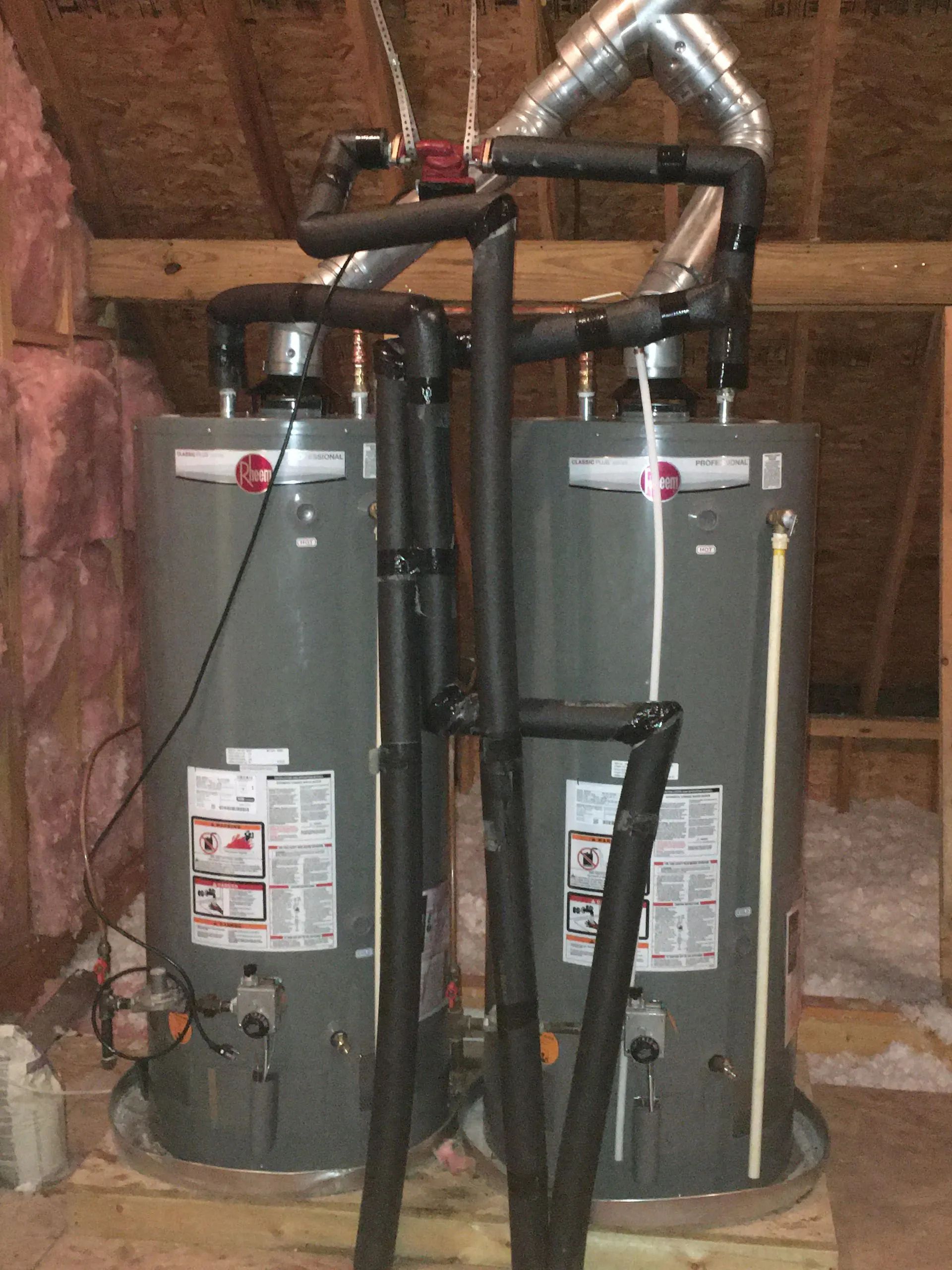
The center flue complicates matters further. Gas tanks route a flue vertically through the middle of the tank to carry combustion exhaust out through the top, and that flue physically interrupts the tank floor. Water and loosened sediment moving toward the drain have to work around it, and the densest, most compacted material tends to settle in the sections furthest from the valve opening, where a quick flush rarely reaches it. A partial flush can even leave hardened material undisturbed while giving the impression the job is finished.
Reaching that material usually takes controlled bursts of water pressure directed around the flue, sometimes combined with breaking up the hardened layer mechanically before it will pass through the valve at all. It's part of why a full flush on an older, heavily scaled tank takes longer and more work than most homeowners expect.
WARNING: A gas water heater's burner and pilot assembly should be shut down safely before a flush begins, and the unit shouldn't be relit until the tank has refilled completely. Draining a gas tank while the burner is still active, or restarting it with air trapped in the system, creates real safety concerns that go beyond ordinary maintenance.
What Sediment Buildup Sounds and Looks Like Before It's a Bigger Problem
A few signals tend to show up before a gas water heater's sediment reaches a serious level, and they're worth paying attention to on their own rather than waiting for a full failure.
Rumbling, Popping, Or A Low Kettling Sound
Water trapped beneath sediment boils under pressure, forcing through the buildup in bursts. This creates popping, rumbling, or percolating sounds that typically follow the burner cycle closely.
Longer Burner Run Times For The Same Water Temperature
When sediment insulates the tank floor, the burner must operate longer and work harder to transfer sufficient heat through the buildup into the surrounding water.
Noticeably Less Hot Water Than The Tank Is Rated For
Sediment occupies space at the tank's bottom, reducing usable water volume even though the tank's rated capacity remains unchanged and unchanged water temperatures may persist.
How Often Gas Water Heaters Need a Flush in a Hard Water Region
Manufacturers commonly recommend an annual flush for most storage gas water heaters, and that baseline holds up well for households on consistently soft water. Mooresville and the surrounding Lake Norman communities, including parts of Iredell and Mecklenburg County, tend to deal with harder water conditions than that baseline assumes, which means sediment can reach a meaningful thickness well before the next scheduled service if flushing is stretched out.
A unit that's gone several years without a flush, or one installed in a home with known hard water, usually benefits from an inspection sooner rather than waiting for the popping sound to show up. By the time the noise becomes noticeable, there's typically already enough buildup to be affecting heat transfer and burner run time.
TIP: If a gas water heater has never been flushed and it's more than a couple of years old, expect the first flush to take noticeably longer than any flush after that. Once the tank is clear, staying on a regular schedule keeps future flushes quick and simple.
Flushing Protects More Than the Tank Itself
Sediment removal doesn't operate in isolation from the rest of the system. A burner working overtime against an insulated tank floor experiences more thermal cycling than it was designed for, which accelerates wear on the burner assembly and the components around it. A thermocouple or pilot system exposed to that same uneven heat pattern can drift out of calibration sooner than it otherwise would. Addressing sediment during a routine service visit is often what keeps those other gas water heater components operating within their intended range in the first place, rather than treating each issue separately as it appears.
Is it safe to mount a TV over a fireplace?
Yes, with the right precautions. Heat off the firebox, wall structure, and viewing angle all need checking first. A gas or electric unit with managed heat can run for years. Wood-burning fireplaces with no heat plan cause trouble.
How far above the fireplace should the TV be mounted?
A common range is 8 to 12 inches between mantel top and screen bottom, though it shifts with your fireplace and wall height. The hotter the unit, the more clearance you want, keeping the screen above rising heat.
Can the heat from my fireplace really damage a TV?
It can, usually slowly. Most sets are rated up to 100-104 degrees, and unmanaged fireplace walls can climb past that. Over time this shows as dead pixels, a warped bezel, or shutdowns. Managing heat prevents it.
Do I need a special mount for a TV over a fireplace?
Most of the time, yes. A fixed mount aims the screen over your head. A tilting mount angles down toward viewers; full-motion arms pull out and down. The right choice depends on screen size and wall height.
Can I hide the wires if my fireplace is brick or stone?
It's harder than drywall but doable. Masonry rarely has an open cavity, so the path must be planned before mounting. Options range from in-wall routing to low-profile surface channels. Mapping the route first avoids disruptive retrofits.
Should the TV be bigger or smaller than the fireplace?
As a rule, match the firebox width or go slightly smaller, keeping the wall balanced. Oversized panels over narrow hearths are common now, but proportion makes the wall read as one clean focal point, not competing elements.
Frequently Asked Questions
Can a homeowner flush their own gas water heater instead of calling a plumber?
A basic drain works for light buildup, but gas units add steps electric models skip, like shutting down the burner and pilot safely. Heavily scaled tanks with hardened sediment need more than a simple drain.
Does the pilot light or gas supply need to be shut off before flushing?
Yes. The burner and pilot assembly shut down before the flush begins so the tank isn't heating while draining, and the gas control returns to normal after the tank refills and is ready to relight.
How long does a professional flush take on a residential gas water heater?
A routine flush on a regularly serviced tank is usually a quick part of a maintenance visit. A tank that's gone years without attention, with hardened sediment around the burner and flue, takes noticeably longer.
Will flushing stop a gas water heater from making popping or rumbling noises?
In most cases, yes, since that sound is typically caused by water boiling beneath the sediment layer. Removing the buildup clears the trapped pocket causing it. Noise that persists afterward points to a separate issue.
Can heavy sediment cause a gas water heater to shut off unexpectedly?
Excess sediment can interfere with components near the tank's base, including sensors tied to the burner and pilot system, which can sometimes trigger a safety shutoff. Flushing the tank and inspecting those components resolves it.
Does a flush remove all the sediment, or does some always remain?
A thorough flush removes most loose and moderately hardened sediment, though heavily calcified material near the flue can leave a small amount behind. A regular flushing schedule keeps that residue from building back up quickly.
When Sediment Buildup Becomes Impossible to Ignore
That popping sound isn't something to wait out. It's the tank signaling that a layer of hardened sediment has formed between the burner and the water above it, forcing the system to work harder than it should. Left unaddressed, that layer only keeps thickening, adding more strain to the burner and the tank lining with each cycle. Catching it early, before the sound turns into a repair, keeps a gas water heater running the way it was built to for years longer.
A gas water heater that sounds off usually isn't past saving, it just needs the right attention at the right time. Lake Norman Plumbing Co.
has spent 45+ years working on tanks throughout Mooresville, NC, and has seen how quickly hard water turns a small buildup into a noisy, hardworking system. Homeowners who stay ahead of that buildup tend to get more consistent hot water and fewer surprises down the line, which in the end is really what good maintenance is meant to deliver.