QUICK ANSWER: A tankless water heater needs descaling because the calcium and magnesium in hard water turn into scale when the water is heated, and that scale coats the narrow passages of the heat exchanger. The coating acts like insulation, so the unit works harder, struggles to hold a steady temperature, and may shut itself down. Descaling circulates a cleaning solution through the heat exchanger to dissolve the mineral buildup, then flushes it out with clean water. Most homes with moderately hard water need it about once a year, and very hard water may call for it every six to nine months.
A homeowner in Denver, North Carolina, notices that the shower has started to misbehave. The water runs hot, then lukewarm, then hot again. Two years ago the tankless unit on the garage wall delivered steady heat from the first second. Now it hums a little louder, the flow at the hot tap seems weaker, and last week the unit shut down in the middle of a rinse. Nothing is leaking and nothing looks broken. The unit is simply choking on its own water supply.
That story is common across our service area, and the cause is usually the same. Tankless heaters are compact machines that do a huge amount of work in a very small space, which makes them more sensitive to minerals than most people expect. This article explains what scale does inside a tankless unit, how to recognize the early signs, what a proper descaling visit involves, and how often it should happen. It does not cover choosing a heater or flushing a storage tank, which are different jobs with different goals.
What Scale Actually Is and Why Tankless Units Collect It
Water in much of the Lake Norman area carries dissolved calcium and magnesium. These minerals are harmless to the tap in a glass, but they behave differently when the water is heated. As the temperature climbs, the minerals separate from the water and cling to the nearest surface as a hard, chalky crust. That crust is scale.
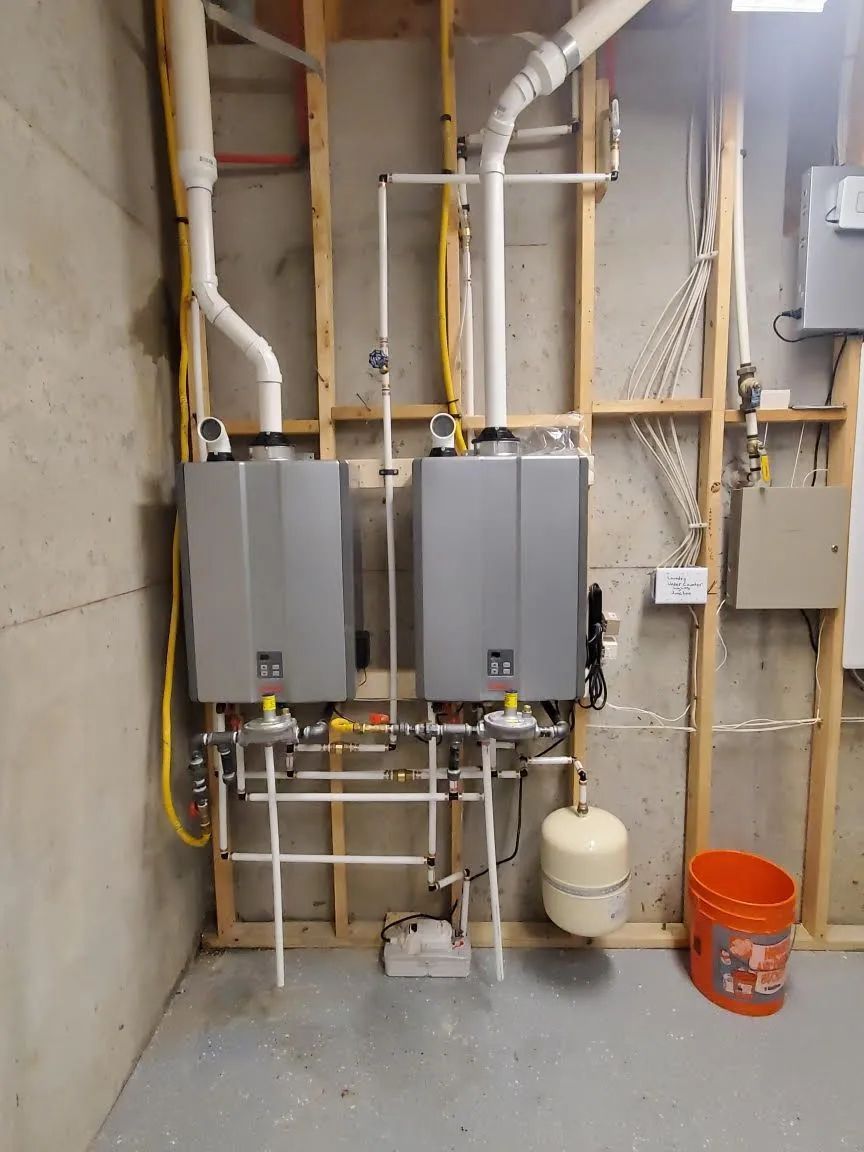
A tank heater collects most of its mineral buildup as loose sediment that settles to the bottom. A tankless heater has no tank for that sediment to fall into. Instead, water passes through a heat exchanger, a set of narrow metal passages that sit right next to a burner or electric element. The water is heated fast, over a very short distance, and the minerals come out of solution right there on the hot metal. Scale grows exactly where the unit does its most important work.
Because the passages are small, even a thin layer matters. A coating that would be barely noticeable on a wide pipe can restrict a tight channel and change how heat moves from the source into the water. That is why tankless manufacturers talk about scale so often, and why our tankless water heater maintenance service includes system flushing and descaling to remove mineral deposits from internal components.
How Scale Slows Down the Heat Exchanger
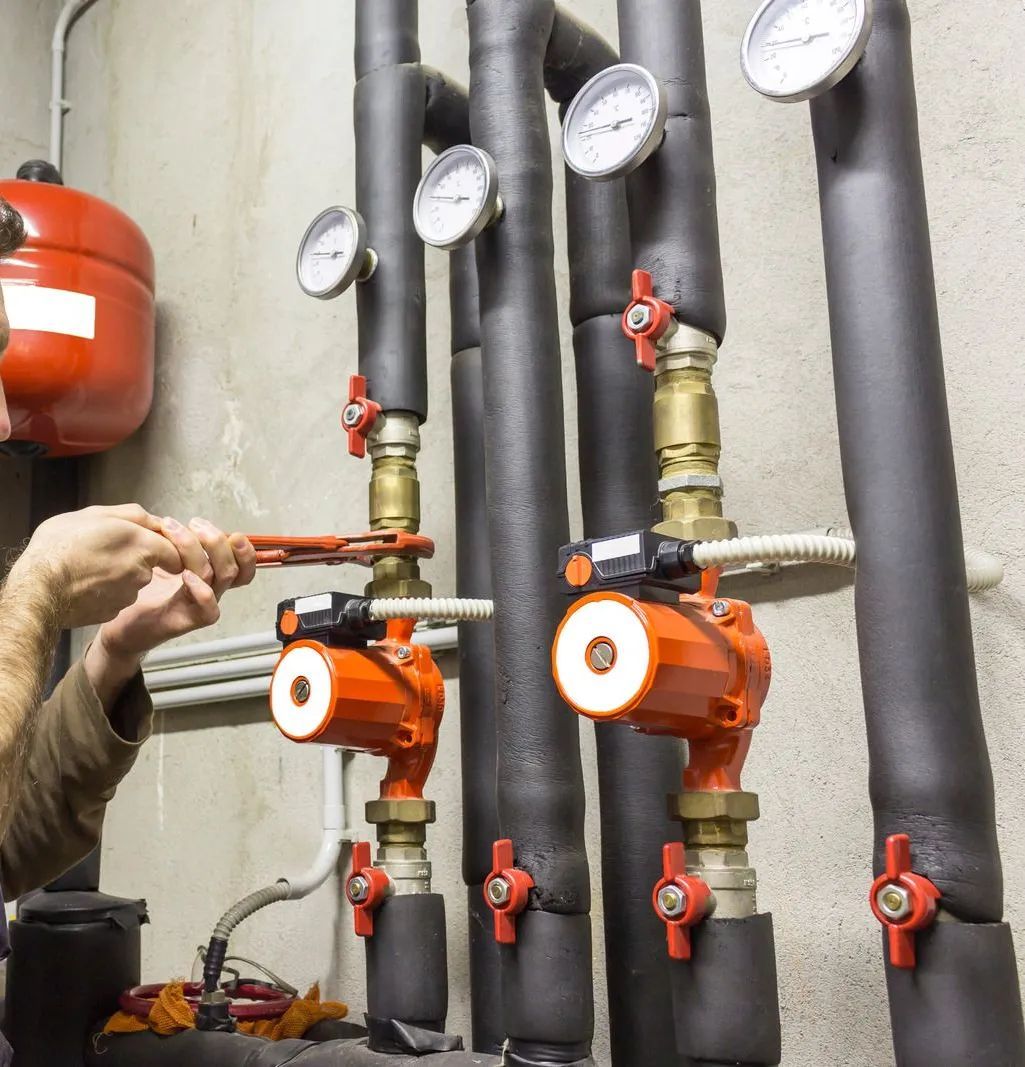
The heat exchanger exists to pass heat from the burner or element into the water as efficiently as possible. Scale sits between the two. It is a poor conductor, so it acts like a blanket wrapped around the metal. The heat has a harder time reaching the water, and the unit has to fire longer or harder to hit the temperature you asked for.
That extra effort creates a chain of problems. The metal runs hotter than it was designed to run, because it is holding heat that is not escaping into the water. The unit cycles more often as its sensors try to correct for swings in temperature. Narrowed passages reduce how much water can move through, which shows up at the faucet as weaker flow. Over time, the extra stress can lead to permanent damage to the heat exchanger, which is the most important and most demanding part of the whole unit to replace.
The good news is that scale builds gradually, and it can be removed while it is still a surface coating. Waiting is what turns a routine maintenance visit into a repair.
Warning Signs That Scale Is Building Up
Scale does not announce itself with a single dramatic symptom. It arrives as a pile of small changes, and most homeowners explain them away at first. Watch for hot water temperature that rises and falls during a shower, and weaker flow at hot water fixtures while cold water flow looks normal. Notice a longer wait for hot water to arrive after you open the tap, or unusual sounds from the unit, such as rumbling, popping, or a higher pitched whine. Pay attention if the unit shuts off during use or displays a fault message, and look for mineral flakes or a white crust at faucet aerators and showerheads.
None of these signs proves scale by itself, because several other problems can cause similar symptoms. A plumber can tell the difference by testing flow and pressure, inspecting the unit, and checking the heat exchanger. If two or three of these sound familiar, treat that as a reason to schedule an inspection rather than a reason to wait and see.
TIP: Look at the aerator on your kitchen faucet and the face of your showerhead. White, crusty buildup there tells you the water in your home leaves mineral deposits when it dries, and the same thing is happening inside the heater at a much higher temperature.
Why the Lake Norman Area Sees This So Often
Homes around Mooresville, Huntersville, Cornelius, and Troutman draw water from a mix of municipal systems and private wells, and mineral content varies from one street to the next. Homes on well water often have the most mineral load, because that water arrives straight from the ground with no treatment for hardness. Municipal water is generally gentler but can still leave deposits over time inside a heater that is working hard every day.
Usage matters as much as water quality. A household with a full house of showers, a soaking tub, and frequent laundry pushes far more water through the heat exchanger than a couple living alone. More water heated means more minerals deposited. That is why the guidance on how often to descale always comes with a range rather than a fixed date. It also explains why two neighbors with identical units can have very different experiences.
Cold winters add another wrinkle. When incoming water is colder, the unit must raise the temperature by a larger amount, so it fires harder and longer. More firing means more heat at the exchanger surface, and scale forms faster under that load. A unit that seemed fine in September can start to show symptoms by January.
What Happens During a Professional Descaling Visit
Descaling is not the same as running vinegar through a faucet or pouring something into a pipe. It is a controlled circulation process, and each step has a purpose. Here is how a visit typically goes.
First, the plumber inspects the unit and checks flow and pressure to see how the heater is performing before any work begins. Then power and the water supply are shut off, so the unit is safe to work on. Service valves on the unit allow hoses to connect to a small pump.
Next, a descaling solution is circulated through the heat exchanger. The solution dissolves the mineral coating from the inside, and the pump keeps it moving so that it reaches every narrow channel. Depending on how much scale has formed, this stage takes some time, and heavier buildup takes longer to clear.
After the solution has done its work, the system is flushed with clean water to carry away the dissolved minerals and any remaining solution. Filters and screens are cleaned or checked at the same time. The unit is then returned to normal operation, tested, and calibrated so it holds temperature properly.
Our tankless maintenance visits typically run about one to two hours, depending on the condition of the unit, the amount of scale, and how easy it is to reach. The same visit covers heat exchanger cleaning, burner and ignition inspection, water pressure and flow testing, and checks on venting and safety components. Descaling is the headline task, but a thorough visit looks at the whole machine.
WARNING: Descaling solutions are strong cleaning agents, and gas tankless units involve combustion and venting. Leave the process to a licensed plumber unless the manufacturer instructions for your unit clearly describe a homeowner procedure, and never work on a gas appliance without shutting off power and the water supply first.
How Often Descaling Should Happen
There is no single schedule that suits every home. As a general guide, a household with moderately hard water should plan on descaling about once a year. Very hard water, which is common with private wells, may call for service every six to nine months. A busy household that runs the unit heavily should be inspected more often, even if the water is only moderately hard.
An annual inspection is the safest rule for any tankless owner, because inspection tells you what the unit is actually doing. During the visit, the plumber can see how much scale has formed since the last service and recommend a schedule that fits your home. If the buildup is light, you may be able to stretch the interval. If it is heavy, a shorter interval protects the heat exchanger.
Keep a simple record of each visit. Notes on the date, what was found, and what was done make it easy to spot a pattern, and many manufacturers expect documented maintenance as part of keeping a unit in good standing.
Reducing How Fast Scale Forms
Descaling removes scale that has already formed, but you can slow the next round. The most direct approach is to reduce the hardness of the water before it reaches the heater. A properly sized water softener removes much of the calcium and magnesium that creates scale, which means less buildup in the heat exchanger, and the same benefit extends to faucets, dishwashers, and washing machines. Whole house filtration can also help with sediment that travels with the water.
Other habits help at the margins. Keeping the temperature setting at a sensible level reduces how aggressively minerals come out of solution, because scale forms faster at higher temperatures. Watching for the early signs listed above lets you schedule service before performance suffers. None of these steps replaces descaling, but together they stretch the time between visits and keep the unit running as designed.
A softener does not make a
tankless heater maintenance free. It lowers the load, and the unit still needs periodic inspection, burner checks, and a look at the venting and safety components. Think of water treatment and descaling as partners rather than substitutes.
Is it safe to mount a TV over a fireplace?
Yes, with the right precautions. Heat off the firebox, wall structure, and viewing angle all need checking first. A gas or electric unit with managed heat can run for years. Wood-burning fireplaces with no heat plan cause trouble.
How far above the fireplace should the TV be mounted?
A common range is 8 to 12 inches between mantel top and screen bottom, though it shifts with your fireplace and wall height. The hotter the unit, the more clearance you want, keeping the screen above rising heat.
Can the heat from my fireplace really damage a TV?
It can, usually slowly. Most sets are rated up to 100-104 degrees, and unmanaged fireplace walls can climb past that. Over time this shows as dead pixels, a warped bezel, or shutdowns. Managing heat prevents it.
Do I need a special mount for a TV over a fireplace?
Most of the time, yes. A fixed mount aims the screen over your head. A tilting mount angles down toward viewers; full-motion arms pull out and down. The right choice depends on screen size and wall height.
Can I hide the wires if my fireplace is brick or stone?
It's harder than drywall but doable. Masonry rarely has an open cavity, so the path must be planned before mounting. Options range from in-wall routing to low-profile surface channels. Mapping the route first avoids disruptive retrofits.
Should the TV be bigger or smaller than the fireplace?
As a rule, match the firebox width or go slightly smaller, keeping the wall balanced. Oversized panels over narrow hearths are common now, but proportion makes the wall read as one clean focal point, not competing elements.
Frequently Asked Questions
Can I descale a tankless water heater myself?
Some manufacturers publish a procedure, but it needs the right pump, hoses, and solution, plus careful shutdown of power and water. A licensed plumber also inspects the unit during the visit.
What happens if I never descale my tankless heater?
Scale keeps building, temperatures become unstable, and flow drops. The unit works harder until it shuts down or fails. Severe buildup can permanently damage the heat exchanger, which is costly and demanding to replace.
Does a water softener replace descaling?
No. A softener reduces how much scale forms and can lengthen the time between visits, but it does not guarantee zero buildup. The unit still needs regular inspection and flushing to stay in good shape.
How do I know if the problem is scale or something else?
Temperature swings, weak flow, odd noises, and shutdowns point toward scale, but gas supply, venting, or failing parts can cause them too. A plumber tests flow and pressure and inspects the unit first.
Is vinegar a safe way to descale?
Vinegar is sometimes suggested online, but the right solution depends on the model and manufacturer instructions. The wrong product or method can harm internal parts. Professionals use circulation equipment that cleans and flushes far more thoroughly.
Should well water homes descale more often?
Usually yes. Well water in the Lake Norman area often carries more dissolved minerals and is rarely softened, so scale forms faster. An inspection after the first year shows how quickly buildup occurs and sets the schedule.
Protecting Your Tankless Heater for the Long Run
Scale is the quiet cause behind many tankless complaints. It builds a little at a time inside the heat exchanger, strains the unit, and eventually shows up as unsteady temperatures, weaker flow, odd noises, and shutdowns. Descaling clears it away, and regular inspection catches it before the damage becomes permanent. A water softener lowers the load, but the unit still benefits from a yearly look inside by a trained professional.
Lake Norman Plumbing Co.
has served Mooresville, NC, for 45+ years, and that experience shapes every tankless maintenance visit. The plumber checks flow and pressure, circulates a descaling solution through the heat exchanger, flushes the system clean, and inspects the burner, venting, and safety components. Records of each visit make it easy to set a schedule that fits your water and your household. The unit keeps delivering steady hot water through the coldest Lake Norman winters.